
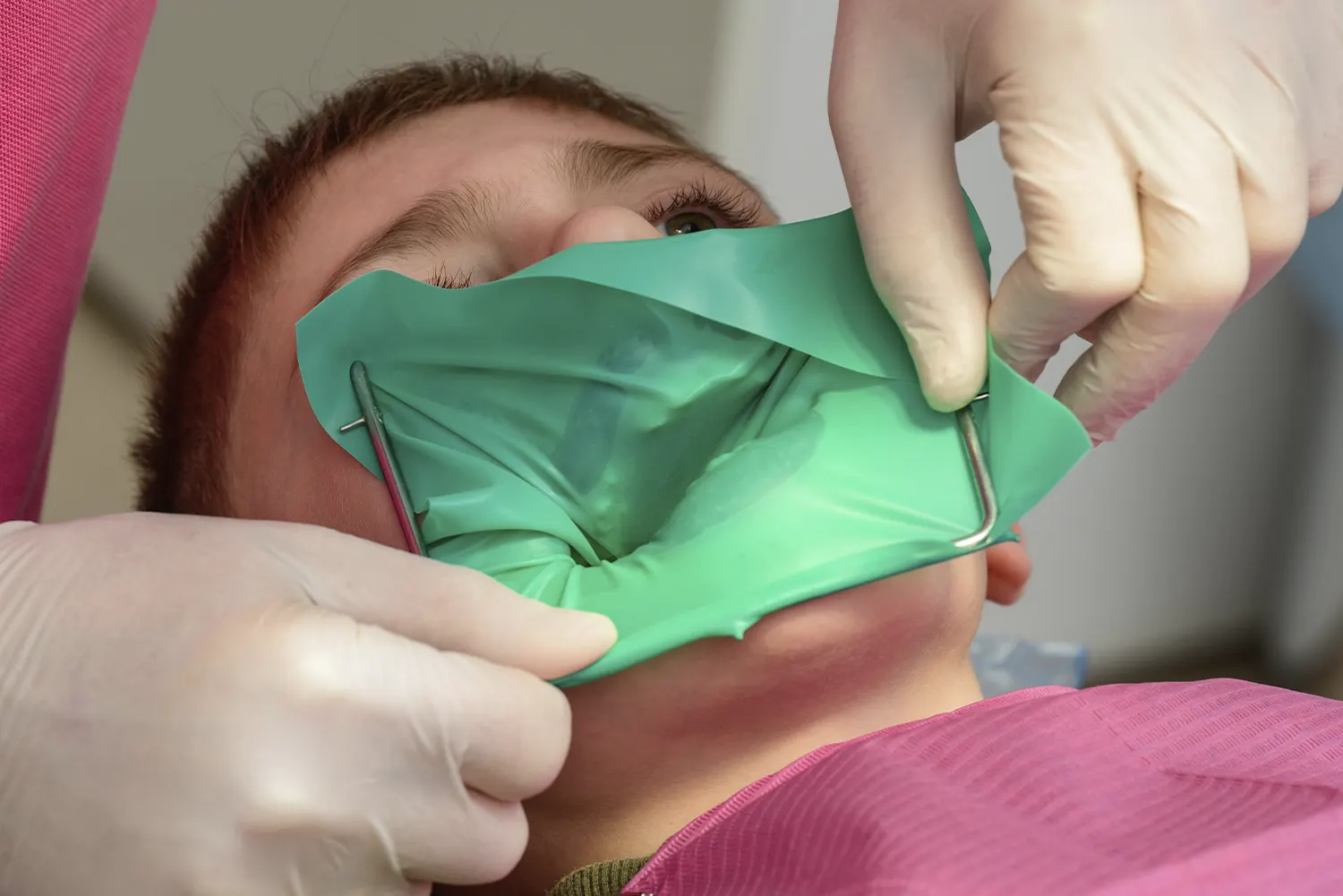
Pulpotomies
In GranD Rapids and Caledonia


%203.21.57%20p.m..webp)


Gentle Care for Healthier Little Smiles
At Mitten Kids Dentistry, we know it can feel overwhelming to hear that your child has a deep cavity. A pulpotomy is a restorative treatment that helps save a baby tooth when decay has reached the inner part of the tooth, called the pulp, but the root of the tooth is still healthy.
Sometimes called a “baby root canal,” a pulpotomy is designed to remove the affected tissue, protect the remaining healthy tooth structure, and help your child keep their natural tooth until it is ready to fall out on its own. Our team uses a gentle, thoughtful approach to keep your child comfortable and help their smile stay healthy as they grow.
Protecting Baby Teeth With Purpose
Baby teeth may be temporary, but they have an important job to do. They help children chew, speak, smile, and hold space for permanent teeth as they develop. When a baby tooth is lost too early, nearby teeth can shift into the open space, which may affect how the adult teeth come in later.
A pulpotomy may be recommended when a cavity is too deep for a simple filling but the tooth can still be saved. During your child’s visit, our pediatric dentists will carefully evaluate the tooth, review any needed X-rays, and talk with you about the best next step for your child’s health, comfort, and long-term smile development.
The Pulpotomy Process
Evaluation and Diagnosis
First, one of our pediatric dentists will examine your child’s tooth and review any necessary X-rays. We will look at the depth of the cavity, the health of the tooth, and whether the tooth can be safely restored with a pulpotomy. If a different treatment is a better fit, we will explain your options clearly so you can feel confident moving forward.
Gentle Treatment
To keep your child comfortable, the tooth and surrounding area will be numbed before treatment begins. The affected portion of the pulp is carefully removed from the top part of the tooth, while the healthy pulp tissue in the roots is left in place. A protective material is then placed inside the tooth to support healing and help prevent further irritation.
Tooth Restoration
After the pulpotomy is complete, the tooth will need to be restored so it can stay strong and functional. In many cases, this means placing a pediatric dental crown over the tooth to protect it from future damage. Our team will check your child’s bite and provide instructions for caring for their smile after treatment.


FAQs
Frequently Asked Questions
What happens after a pulpotomy?
After treatment, your child may feel numb for a little while and should avoid chewing until the numbness wears off. We will provide detailed aftercare instructions and let you know what to expect. With good brushing, flossing, regular visits, and healthy habits at home, the restored tooth can continue supporting your child’s smile until it is ready to fall out naturally.
Does every deep cavity need a pulpotomy?
Not always. Some cavities can be treated with a filling or crown, while others may need pulp therapy or a different treatment. Our pediatric dentists will evaluate your child’s tooth and recommend the most appropriate option based on the health of the tooth and surrounding area.
Why save a baby tooth if it will fall out anyway?
Baby teeth help children chew, speak, and hold space for their adult teeth. If a baby tooth is lost too early, nearby teeth may shift, which can create spacing or alignment concerns later. When possible, saving a baby tooth can help support healthy growth and development.
Will my child be comfortable during a pulpotomy?
Yes. We take your child’s comfort seriously and use local anesthetic to numb the area before treatment. Our team also explains each step in a calm, child-friendly way. If your child needs additional support, we can discuss comfort options based on their needs.
Is a pulpotomy the same as a root canal?
A pulpotomy is sometimes called a “baby root canal,” but it is not the same as an adult root canal. A pulpotomy removes the affected pulp tissue from the top portion of a baby tooth while preserving the healthy tissue in the roots. It is commonly used to help save baby teeth with deep decay.


Bright Smiles Start Here
Let's embark on the journey to brighter, healthier smiles together! Don't wait—take the first step by scheduling an appointment now.